The tripartite synapse and the tonic neural tripod of mental balance.
What we had always thought about the synapse, since Sherrington gave it its name, meaning “to grasp together” (syn-apse) Is that neurons communicated between each other in pairs. They were binary. Each neuron has thousands of synapses located along the branching dendrites, facilitating pattern recognition and tolerant of the noise being generated in the system, but they are not alone in their unity.
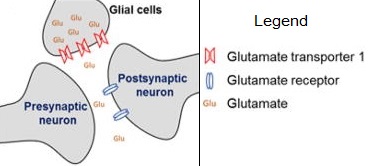
The biggest revolution in our understanding of synaptic architecture is very recent, the tripartite synapse. A form of glial cell is prevalent in the brain, nowhere more so than the cerebellum. Called astrocytes these cells were thought to perform a sort of maintenance function in the system, but in fact they fundamentally shape and regulate synaptic behavior.
Unlike neurons which communicate electrically the astrocyte is a chemical messenger reliant upon calcium ions for communication. Where the neurons interact at the scale of milliseconds the regulatory astrocyte in the synaptic system works at a much slower pace, seconds and even minutes.
This shift in time scale helps to explain their integrative regulatory role and reflects the parallel role of the tonic system in the body. The dynamic system of muscles, that we most often relate to, are visible, superficial, large, and highly volitional. We can see them, feel them, and move them consciously. They are located on the surface. We can make our hands and arms and legs move at a very rapid pace whether in a dynamic manner throwing a ball or a repetitive manner as in running.
A shift in timing occurs as we go deeper into the system, into the tonic muscles of the core. All of our joints have a “core” element for stabilization and balance: these are the smaller muscles closest to the bone whose single motoric preoccupation is integration and stability. But the true core is deep and axial and is found in the structure of the spine, vertebrate core, called the tonic functional system by structural bodyworkers.
The role of these deep postural muscles is very different from the surface system. Both their timing and their metabolism is very different, red meat instead of white, slow and steady instead of fast and abrupt. In meditation, the movement arts, things like yoga and tai chi, we rely upon this tonic system for bodily awareness.
Embodied cognition then has this tonic flavor that emerges from deep within. The pace of technology and modern society is increasing exponentially but beneath it all the steady pulse, the ebb and flow of evolution, the seasons, the planets, and life itself provides a reassuring foundation, a ground that brings both stability and balance to the overreach of the intellect in modern life. Coordination does not occur in the dynamic system nor in the forebrain. It occurs in the tonic postural system deep within the muscles of the body and in its “head ganglion, the cerebellar transform, with such rich and close packed neurons in its regular matrix like structure. Within the cerebellar system that is not just the neuronal synapse but the tripartite synapse, their astrocyte companions, that produce the consonance and resonance that assures integration keeps pace with differentiation. It is this neuromuscular tonic system that makes life meaningful rather than just eventful.
 Three Bones Theory
Leave a Reply