
Metacognition does not mean cognition about cognition. That is a very shortsighted answer. Cognition about cognition is just more cognition. While this answer is convenient for computer science it doesn’t reflect the neurology of the human body. The Greek prefix meta means above and beyond but it also means within and between. There is also an element of it that implies community or prosociality. Metacognition is more nuanced than just thinking about thinking.
The brains activity is determined by the inputs that it receives. Metastability within the body produces metacognition. In this sense we can understand perceptual shift as a result of coordination dynamics in the body. If it is possible to listen a higher level organization in the body then we can also expect to activate associated systems in the brain. In physics and dynamical systems theory, including brain science, metastability within a system implies a phase shift, a reorganization of the oscillations of the brain as well as different activation patterns.
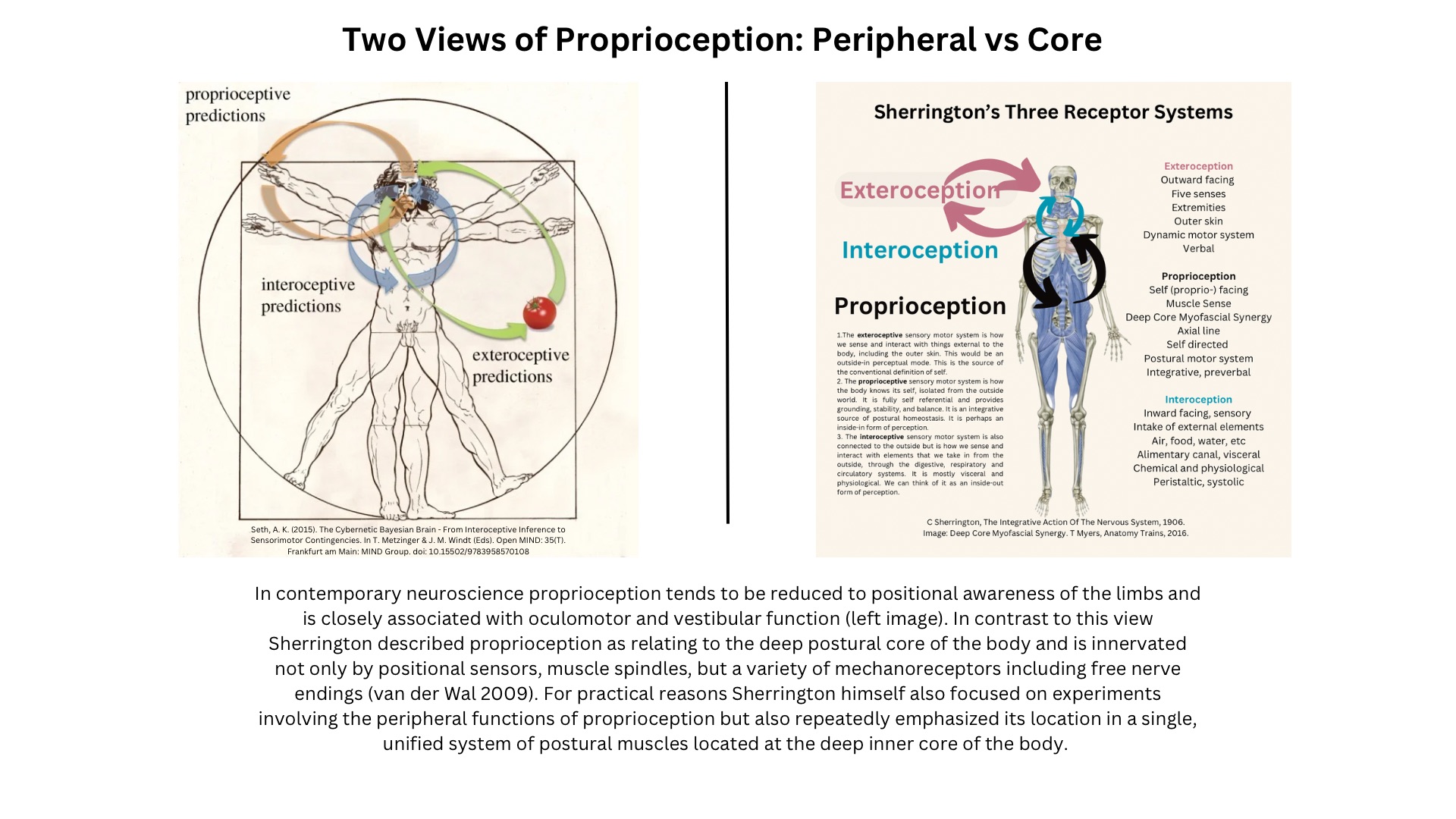
Metacognition is not just thinking about thinking. It is a fundamental shift into a different form of cognition, and there are two major forms outer and inner. Extero-ception is our conventional form of awareness and we could call the associated cognitive activity “thinking” as a conscious act. Its mental mode is Reason, science, or rationality. It is objectifying and reductive, focused on external reality. It values observable evidence and clear logical analysis of the parts of a system.
The second major form of perception in the body is called proprio-ception. It is not at odds with exteroception but compliments it profoundly. Proprioception does not mean inner awareness as much as it means self-awareness, or “innermost” awareness. This happens in the deepest part of the body: the axis or deep core. Cognition in this system would be described as self-awareness, somatic intelligence, or perhaps animal intelligence. Proprioception does not have the variety of sensory systems that exteroception has. It is mechanical. It is fundamentally muscles and bones.
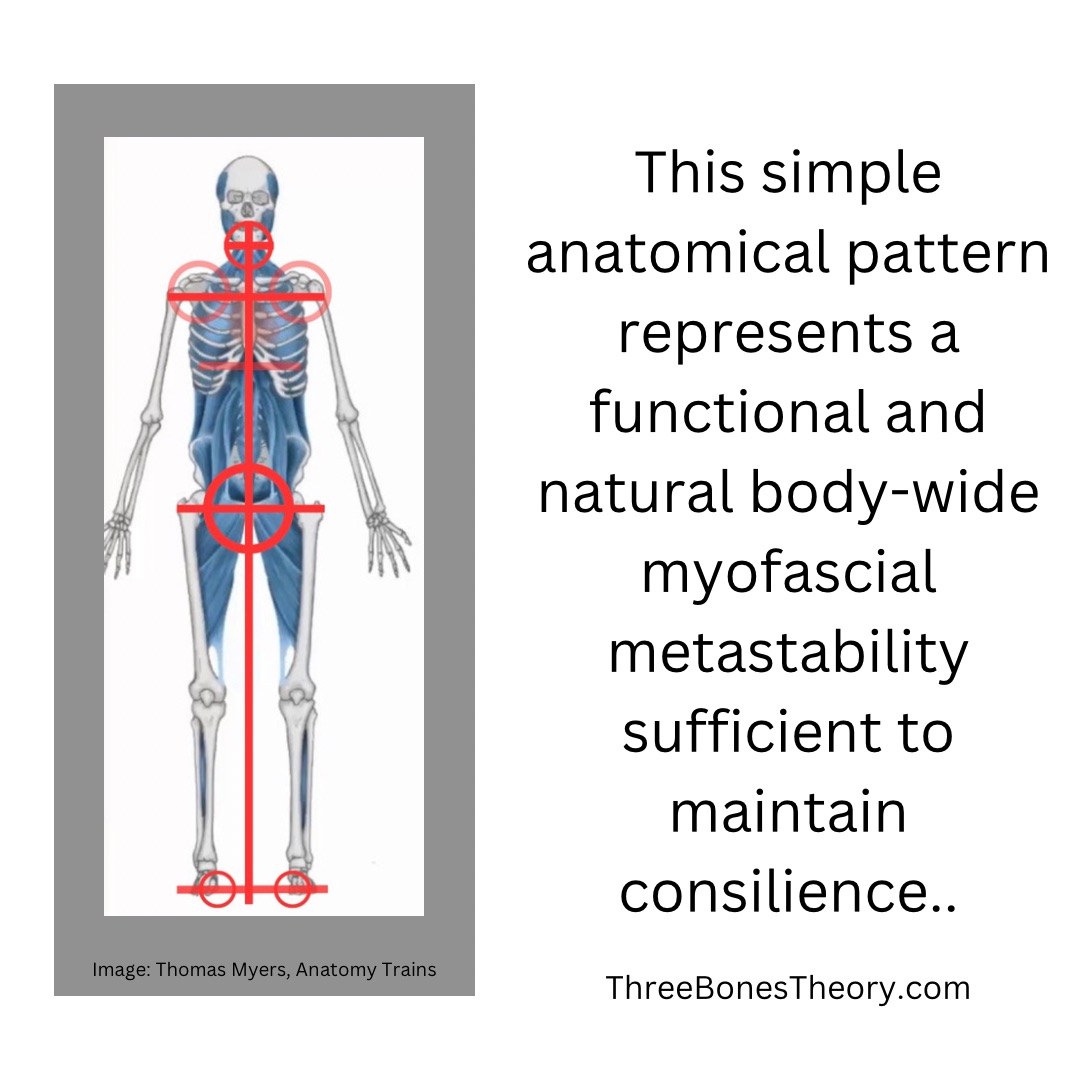
The activity of the system is mechanotransductive or haptic, involving the muscle sense and tone. Self awareness is not intelllectual. It is postural, meditative, long and continuous, stabilizing. The biomechanics of the system are synergistic and consist of postural motor functions. These are synergistic systems of long, continuous micromovements. This is the system of physical (rather than chemical) homeostasis in the body. In neurophysics it has been described as active inference, but Consilience is a richer term for the mental experience.
The distinction between these two forms of perception is very important. Exteroception is the perceptual system by which we know the world and ourselves from the outside. It is the status quo. This is normal and understandable. However if we see this perceptual system and definition of “self” as producing modern rational thinking and science it is both the source of our strength and our undoing. Exteroceptive bias is the name of the problem we are facing. In control theory or engineering bias is part of any control system. We set the thermostat depending upon the season. But when the bias is enshrined as a norm and resists change, this can threaten a breakdown in the system. The paradigm shift is civilization level and these are its terms. Nothing could be more personal or more universal than the body’s perceptual systems.
If exteroceptive bias is the problem, then proprioceptive anatomy is the solution. The anatomy of this system is how we know it, or “ride” it, because it is a fundamentally different form of perception.
Finally, if we are thinking about the form of cognition that is associated with this shift, the coding that accompanies the deep inner self organizing and self directed nature of living systems, proprioception should be emphasized. If metacognition comes from within and between us then proprioception is the missing element.
 Three Bones Theory
Leave a Reply