
Fascia: Organ of Interoception, and its Skeletal Architecture
Prosocial Embodiment Workshop 3
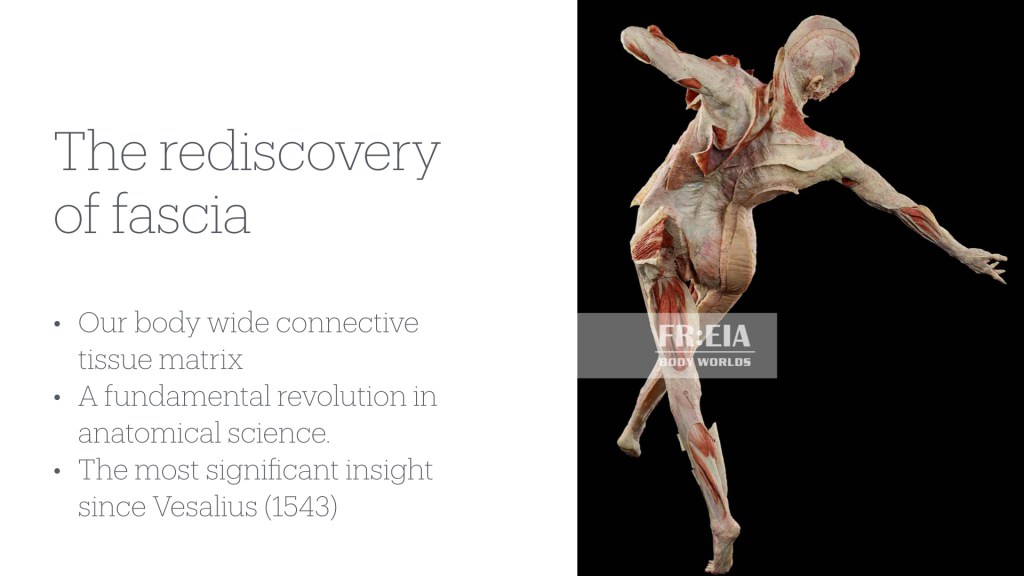
Prosocial Embodiment Workshop 3 Monday June 17 2:30-3:30pm PDT (GMT-7). Please get in touch at Prosocial Commons or on LinkedIn. We are building a Linked In group for Prosocial Embodiment. Linked In: https://www.linkedin.com/groups/14475114/
Fascia: Organ of Interoception, and its skeletal architecture
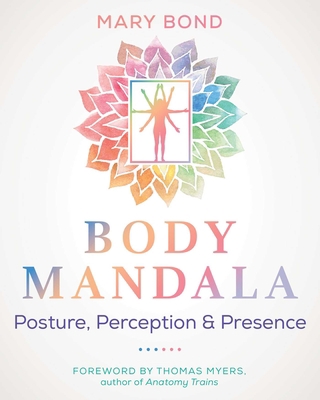
In her new book, Your Body Mandala (https://www.yourbodymandala.com) veteran structural integrator and embodiment teacher Mary Bond calls fascia, our connective tissue matrix, the “organ of interoception” (2018). There is a growing body of research in support of this (for example, Schleip et al 2014, Langevin 2021, Bordoni et al 2017).
Mary Bond writes: “Fascia is a ubiquitous and continuous medium that contains, separates and interconnects all of your other tissues and organs. Its significance was largely unrecognized until the early 2000s. It may well prove to be the organ of the twenty-first century” (2018).
Fascia is like an inner skin. In fact it is a layered and complex system of interconnected inner skin, by which we know and feel ourselves from within. This is termed interoception. Interoception, like Exteroception, involves a variety of sensory organs and receptors. Exteroception refers to the conventional 5 senses by which we know ourselves, starting with our outer membrane, our epidermis. Our skin gives us visual and tactile confirmation of who we are in the world, our shape, size, bony contours, position, and appearance. Our inner skin, fascia, informs us as to our inner self—our inner condition, movements, and feel. This includes a powerful emotional and somatic component. Fascia, then, is the key to our inner awareness, to active change from within, and offers a host of intuitive, natural and organic adaptive responses to the pervasive stressors and trauma of cultural and environmental mismatch.
As Mary Bond has said, it may well prove to be the organ of the twenty-first century!
We will discuss this system of interoception and its skeletal architecture in the anatomy of the axial line of the body. We will explore several prominent, central bony servomechanisms along the axial line that act as affordances, actively facilitating natural and intuitive access to our major joint complexes and inner awareness. These bony servomechanisms, or affordances, are crucial landmarks facilitating our active perceptual involvement in this profound inner anatomy. There will be plenty of time for discussion and active exploration within ourselves.
Mary will be joining us for this workshop so please look up her book. It is beautifully written and offers sage advice for change that starts from within! We hope to invite her to present at an upcoming workshop.
Prosocial Embodiment Workshop 3 Monday June 17 2:30-3:30pm PDT (GMT-7). Please get in touch at Prosocial Commons or on LinkedIn. We are building a Linked In group for Prosocial Embodiment.
Linked In: https://www.linkedin.com/groups/14475114/
Bond, Mary. Your Body Mandala. McP Books. 2018
Bruno Bordoni, Fabiola Marelli; Emotions in Motion: Myofascial Interoception. Complement Med Res 28 April 2017; 24 (2): 110–113. https://doi.org/10.1159/000464149
Langevin H. M. (2021). Fascia Mobility, Proprioception, and Myofascial Pain. Life (Basel, Switzerland), 11(7), 668. https://doi.org/10.3390/life11070668
Schleip, R., Mechsner, F., Zorn, A., & Klingler, W. (2014). The bodywide fascial network as a sensory organ for haptic perception. Journal of motor behavior, 46(3), 191–193. https://doi.org/10.1080/00222895.2014.880306
 Three Bones Theory
Leave a Reply